Why Is The Haber Process Important
These details and conditions need to be remembered. Most explosives are organic nitrate compounds which are.
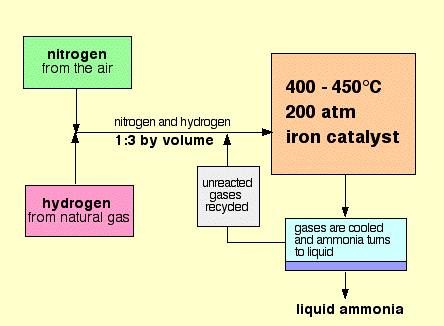
The Haber process is still important today because it produces ammonia which is needed for fertilizer and for many other purposes.

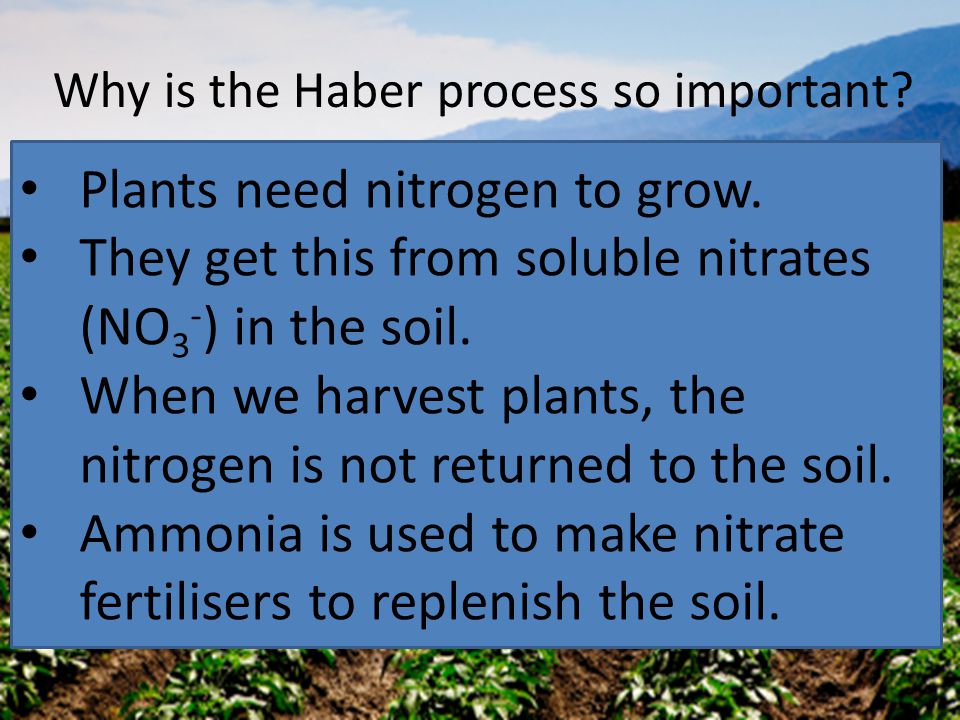
Why is the haber process important. This page describes the Haber Process for the manufacture of ammonia from nitrogen and hydrogen and then goes on to explain the reasons for the conditions used in the process. 2019-02-01 The primary reason the Haber process is important is because ammonia is used as a plant fertilizer enabling farmers to grow enough crops to support an ever-increasing world population. Very little if anything.
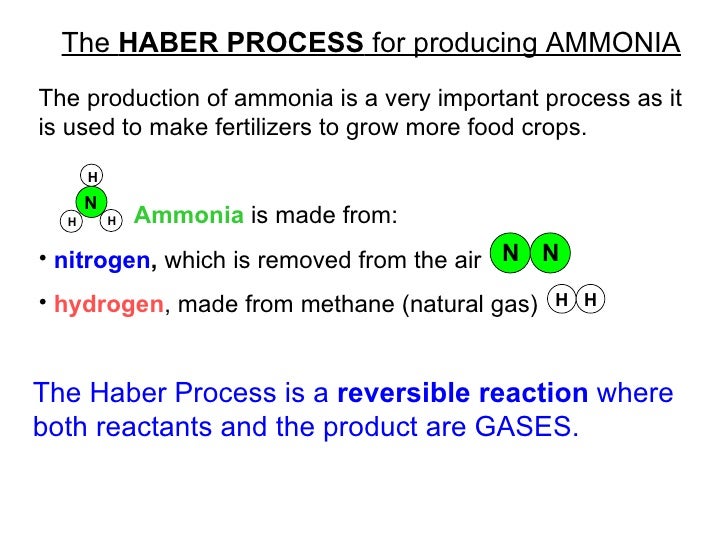
The Haber process is an important industrial process which needs to be understood for A-level. Growing world populations were placing strains on this natural source. Hydrogen is obtained by reacting natural gas.
The Haber-Bosch process is extremely important because it was the first of processes developed that allowed people to mass-produce plant fertilizers due to the production of ammonia. The Haber process The raw materials for the process of making ammonia are hydrogen and nitrogen. This video answers- Why is the Haber process so important- What is the chemical equation for the Haber process- What are the conditions for the Haber proc.
You must also be able to USE the ideas on other unfamiliar equilibria. The Haber process is important because prior to its discovery ammonia had been difficult to produce on an industrial scale and fertilizer generated from ammonia today is responsible for. Ammonia is made using the Haber process which involves a reversible reaction between nitrogen and hydrogen.
2009-03-16 In WWI the Haber Process was essential to the German war effort as it enabled the production of explosives and fertilizers. It looks at the effect of temperature pressure and catalyst on the composition of the equilibrium mixture the rate of the reaction and the economics of the process. The Haber-Bosch Process is important because it was the first process developed that allowed people to mass produce plant fertilizers due to the production of ammonia.
2016-05-24 The Haber-Bosch Process was an industrial process for the manufacture of ammonia that combined nitrogen from the air with hydrogen that obtained mainly from methane. The Haber process supplies 500 million tons 453 billion kilograms of nitrogen-based fertilizer annually which is estimated to support food for a third of the people on Earth. The Haber Process for the synthesis of ammonia NH3 gas from its elements nitrogen N2 and hydrogen H2 is discussed in almost every high school chemistry text as an excellent example of chemical equilibrium.
This fertilizer helps to. EFFECT ON THE POSITION OF EQUILIBRIUM. The Haber-Bosch process operates at high pressure so as to shift the equilibrium to the right and high temperature to increase the rates of the reaction.
The Haber-Bosch process is considered by many scientists and scholars as one of the most important technological advances of the 20th century. Haber developed the process at the beginning of the twentieth century leading up to the First World War. 2019-04-10 The process was developed in the early 1900s by Fritz Haber and was later modified to become an industrial process to make fertilizers by Carl Bosch.
At this time nations such as Germany imported the nitrates that they required for fertilisers and explosives from South America. Ammonia is one of the most important compounds needed to make synthetic fertilisers. The secret to the Haber-Bosch process proved to be a catalyst of iron with a small amount of aluminium added aluminium was at the time an exotic and expensive metal that probably attracted Habers attention as a novelty.
The Haber process produces about 500 million tons 453 billion kilograms of fertilizer every year.
 C2 4 4 Haber Process Optimisation
What Type Of Reaction Takes Place In The Haber Process Exothermic Or Endothermic Quora
 Making Ammonia The Haber Process Ppt Video Online Download

